

As a supplier of Marking Airport Mirrors, I've often been asked about the performance standards for these specialized components. In the field of laser marking, the Marking Airport Mirror plays a crucial role, and understanding its performance standards is essential for both manufacturers and users.
The Importance of Marking Airport Mirrors in Laser Marking Systems
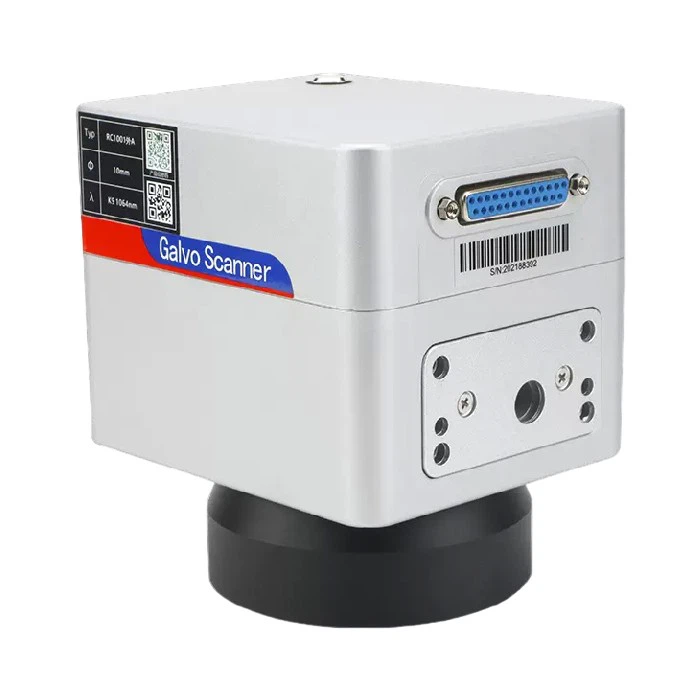
Laser marking is a widely used technology in various industries, including automotive, aerospace, electronics, and jewelry. It offers high precision, permanent marking, and the ability to mark a wide range of materials. The Marking Airport Mirror is a key part of the galvanometer - based laser marking system. The Galvanometer Laser Marking Machine uses mirrors to direct the laser beam onto the workpiece. The Marking Airport Mirror, in particular, is responsible for accurately reflecting and guiding the laser beam to the desired position on the marking surface.
Optical Performance Standards
Reflectivity
One of the most critical performance standards for a Marking Airport Mirror is its reflectivity. Reflectivity refers to the proportion of incident light that is reflected by the mirror. In laser marking applications, high reflectivity is essential to minimize energy loss. A mirror with low reflectivity will absorb a significant amount of the laser energy, which can lead to heating of the mirror and a reduction in the laser power reaching the workpiece. For most laser marking applications, a reflectivity of over 98% is desirable. This high reflectivity ensures that the maximum amount of laser energy is used for marking, resulting in clear and precise marks.
Flatness
The flatness of the Marking Airport Mirror is another important optical performance standard. A flat mirror surface is necessary to ensure that the laser beam is reflected accurately without distortion. Even a small deviation in flatness can cause the laser beam to spread or focus incorrectly, leading to blurred or uneven marks. The flatness is typically measured in terms of the peak - to - valley (PV) value. For high - precision laser marking, a PV value of less than λ/10 (where λ is the wavelength of the laser) is often required.
Surface Quality
The surface quality of the mirror also affects its performance. A smooth and clean surface is essential to minimize scattering of the laser beam. Scratches, pits, or other surface defects can cause the laser beam to scatter, reducing the intensity and focus of the beam on the workpiece. Surface quality is usually specified by the surface roughness, which is measured in micrometers or nanometers. For laser marking applications, a surface roughness of less than 10 nm is often required.
Mechanical Performance Standards
Mounting Stability
The Marking Airport Mirror needs to be mounted securely in the laser marking system. Any movement or vibration of the mirror during the marking process can cause the laser beam to shift, resulting in inaccurate marks. Therefore, the mirror should be designed to be mounted stably, with a reliable mounting mechanism. The mounting system should be able to withstand the mechanical stresses and vibrations that occur during normal operation of the laser marking machine.

Thermal Stability
Laser marking generates heat, and the Marking Airport Mirror needs to be able to withstand the thermal effects. Thermal expansion can cause the mirror to deform, which can affect its optical performance. The mirror material should have a low coefficient of thermal expansion to minimize the effects of temperature changes. Additionally, the mirror should be able to dissipate heat effectively to prevent overheating.
Environmental Performance Standards
Resistance to Contamination
In industrial environments, the Marking Airport Mirror may be exposed to various contaminants, such as dust, oil, and chemicals. These contaminants can adhere to the mirror surface, reducing its reflectivity and causing scattering of the laser beam. Therefore, the mirror should have good resistance to contamination. Some mirrors are coated with anti - reflective or anti - contamination coatings to protect the surface and maintain its performance.
Humidity and Temperature Resistance
The mirror should also be able to operate in a wide range of humidity and temperature conditions. High humidity can cause corrosion of the mirror surface, while extreme temperatures can affect the mechanical and optical properties of the mirror. The mirror material and coating should be selected to ensure that it can withstand the environmental conditions in which the laser marking machine will be used.
Testing and Certification
To ensure that the Marking Airport Mirror meets the performance standards, it is necessary to conduct various tests. Optical tests, such as reflectivity measurement, flatness measurement, and surface quality inspection, are commonly performed. Mechanical tests, including mounting stability and thermal stability tests, are also carried out. Environmental tests, such as humidity and temperature cycling tests, can be used to evaluate the mirror's performance under different environmental conditions.
Certification from recognized standards organizations can provide assurance of the mirror's quality and performance. For example, ISO 9001 certification indicates that the manufacturer has a quality management system in place to ensure consistent production of high - quality products.
Meeting the Performance Standards in Our Products
As a supplier of Marking Airport Mirrors, we are committed to meeting and exceeding the performance standards. We use high - quality materials and advanced manufacturing processes to ensure that our mirrors have high reflectivity, excellent flatness, and smooth surface quality. Our mirrors are designed with a stable mounting mechanism and have good thermal and environmental stability.
We also conduct rigorous testing on each mirror before it leaves our factory. Our testing facilities are equipped with state - of - the - art equipment to measure the optical, mechanical, and environmental performance of the mirrors. This ensures that our customers receive mirrors that meet the highest quality standards.
Conclusion
In conclusion, there are indeed strict performance standards for Marking Airport Mirrors in laser marking applications. These standards cover optical, mechanical, and environmental aspects, and they are essential to ensure the accuracy, precision, and reliability of laser marking systems. As a supplier, we understand the importance of these standards and are dedicated to providing high - quality Marking Airport Mirrors that meet the needs of our customers.
If you are in the market for Marking Airport Mirrors or have any questions about our products, we invite you to contact us for further discussion and potential procurement. We look forward to working with you to meet your laser marking requirements.
References
- "Laser Marking Technology: Principles and Applications" by John Doe, published by Laser Press, 2020.
- "Optical Components for Laser Systems" by Jane Smith, published by Optics Publishers, 2018.
- ISO 9001:2015 Quality Management Systems - Requirements.


