

Improving the dynamic response of a servo motor is crucial for enhancing the overall performance of various industrial and automation systems. As a servo motor supplier, I've witnessed firsthand how a well - tuned servo motor can significantly boost productivity and precision in applications. In this blog, I'll share some practical strategies to enhance the dynamic response of servo motors.
Understanding the Basics of Servo Motor Dynamic Response
Before delving into improvement methods, it's essential to understand what dynamic response means in the context of servo motors. Dynamic response refers to how quickly and accurately a servo motor can adjust its speed, torque, and position in response to changes in the input command. A high - quality dynamic response ensures that the motor can follow complex motion profiles precisely, reducing errors and improving the overall efficiency of the system.
Optimizing the Control System
The control system is the brain of the servo motor. By fine - tuning the control parameters, we can greatly enhance the dynamic response.
PID Tuning
Proportional - Integral - Derivative (PID) controllers are commonly used in servo motor control systems. The proportional term adjusts the output based on the current error, the integral term accounts for past errors, and the derivative term predicts future errors. Properly tuning these parameters is a delicate balance. For example, increasing the proportional gain can make the motor respond more quickly to errors, but too high a gain can lead to overshoot and instability. On the other hand, adjusting the integral gain can eliminate steady - state errors, but excessive integral gain may cause the system to become sluggish. Regularly testing and adjusting these parameters according to the specific application requirements can lead to a significant improvement in dynamic response.
Advanced Control Algorithms
In addition to traditional PID control, advanced control algorithms such as model - predictive control (MPC) and fuzzy logic control can be employed. MPC uses a mathematical model of the system to predict future behavior and optimize control actions accordingly. This can be particularly useful in applications where the system has complex dynamics or where disturbances are common. Fuzzy logic control, on the other hand, can handle imprecise or uncertain information, making it suitable for systems with non - linear characteristics.
Mechanical Considerations
The mechanical components connected to the servo motor can also have a substantial impact on its dynamic response.
Reducing Inertia
The inertia of the load connected to the servo motor affects its ability to accelerate and decelerate quickly. By reducing the inertia of the load, the motor can respond more rapidly to input commands. This can be achieved by using lighter materials for the moving parts or by optimizing the mechanical design to minimize unnecessary mass. For example, in a robotic arm application, using carbon fiber components instead of steel can significantly reduce the overall inertia, improving the dynamic response of the servo motors driving the arm.
Minimizing Friction
Friction in the mechanical system can cause energy losses and reduce the motor's ability to respond quickly. Regular maintenance of the mechanical components, such as lubricating bearings and ensuring proper alignment, can help minimize friction. Additionally, using low - friction materials and precision - engineered components can further improve the system's efficiency and dynamic response.
Power Supply and Electrical Systems
A stable and appropriate power supply is essential for the optimal performance of servo motors.
Adequate Power Rating
The power supply should have a sufficient power rating to meet the peak power demands of the servo motor. An undersized power supply can lead to voltage drops during high - load operations, which can cause the motor to lose torque and respond sluggishly. It's important to carefully calculate the power requirements of the motor based on its operating conditions and select a power supply with an appropriate margin of safety.
Electrical Filtering
Electrical noise in the power supply can interfere with the control signals of the servo motor, affecting its dynamic response. Using electrical filters can help reduce this noise and ensure a clean power supply. Filters such as electromagnetic interference (EMI) filters can be installed between the power supply and the motor to block unwanted high - frequency signals.

Application - Specific Optimization
Different applications have different requirements for servo motor dynamic response.
High - Speed Applications
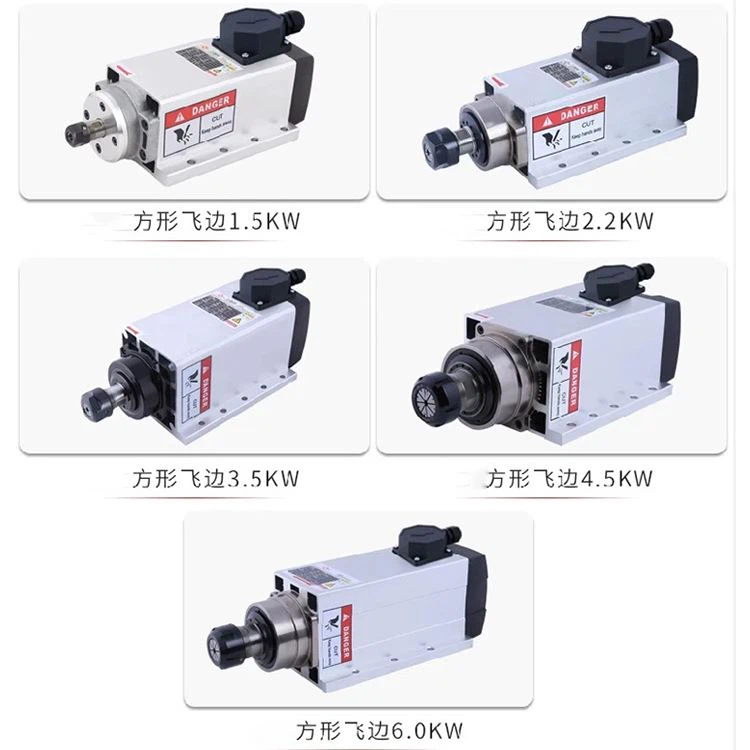
In high - speed applications, such as 3.2kw Vacuum Cleaner, the motor needs to be able to accelerate and decelerate rapidly. Optimizing the control system for high - speed operation, reducing inertia, and ensuring a stable power supply are critical. Additionally, using high - performance bearings and lubricants can help minimize friction at high speeds.
Precision Positioning Applications
For precision positioning applications, like those in 4.5kw Air Cooling Spindle, the focus is on achieving accurate and repeatable positioning. This requires fine - tuning the control parameters to minimize steady - state errors and overshoot. Advanced control algorithms can be particularly beneficial in these applications to ensure precise tracking of the desired position.
Tool - Changing Applications
In applications involving tool changes, such as with an Er20 Tool Holder, the servo motor needs to be able to quickly and accurately adjust the position and orientation of the tool. Reducing the response time of the motor can improve the overall efficiency of the tool - changing process, leading to increased productivity.
Monitoring and Feedback
Regular monitoring of the servo motor's performance is essential for continuous improvement of its dynamic response.
Sensor Feedback
Using high - quality sensors, such as encoders and resolvers, to provide feedback on the motor's position, speed, and torque can help the control system make more accurate adjustments. These sensors can detect even small deviations from the desired values and allow the control system to correct them in real - time.
Performance Analysis
Analyzing the motor's performance data over time can help identify trends and potential issues. By monitoring parameters such as speed, torque, and current, we can detect signs of wear, misalignment, or other problems that may be affecting the dynamic response. This information can then be used to make proactive adjustments to the control system or perform maintenance on the mechanical components.
Conclusion
Improving the dynamic response of a servo motor is a multi - faceted process that involves optimizing the control system, considering mechanical factors, ensuring a stable power supply, and tailoring the solution to the specific application. As a servo motor supplier, we are committed to providing our customers with high - quality products and technical support to help them achieve the best possible performance from their servo motors.
If you are interested in improving the dynamic response of your servo motors or have any questions about our products, we invite you to contact us for a detailed discussion. Our team of experts is ready to assist you in finding the most suitable solutions for your specific needs.
References
- Dorf, R. C., & Bishop, R. H. (2016). Modern Control Systems. Pearson.
- Krause, P. C., Wasynczuk, O., & Sudhoff, S. D. (2013). Analysis of Electric Machinery and Drive Systems. Wiley.
- Chiasson, J. N. (2005). Modeling and High - Performance Control of Electric Machines. Wiley - Interscience.


