

Hey there, folks! As a supplier of Servo Motor, I've been getting a lot of questions lately about the differences between open-loop and closed-loop control of a servo motor. So, I thought I'd take a few minutes to break it down for you in a way that's easy to understand.

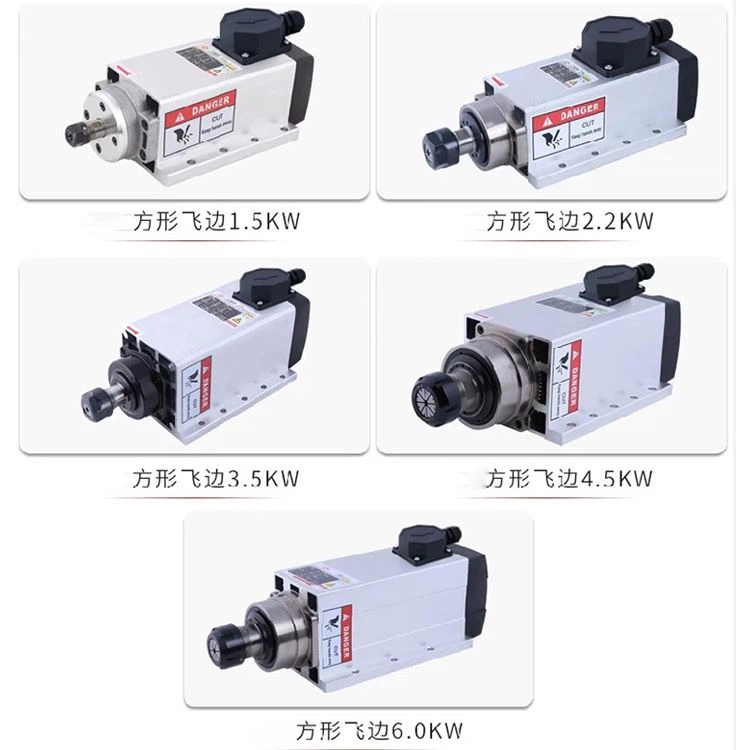
Let's start with open-loop control. In an open-loop system, the servo motor operates without any feedback about its actual position or performance. The controller sends a signal to the motor, telling it what to do, and the motor just does it. It's like giving someone directions without asking if they've actually arrived at their destination.
One of the biggest advantages of open-loop control is its simplicity. There are fewer components involved, which means it's generally cheaper to implement. It's also easier to set up and maintain. For applications where precision isn't critical, like simple conveyor systems or basic automation tasks, open-loop control can be a great choice.
However, open-loop control does have its limitations. Since there's no feedback, the motor has no way of knowing if it's actually achieving the desired position or speed. If there's any external interference, like a change in load or friction, the motor might not perform as expected. This can lead to inaccuracies and inconsistencies in the system's operation.
Now, let's talk about closed-loop control. In a closed-loop system, the servo motor is equipped with a feedback device, such as an encoder or a resolver. This device constantly monitors the motor's position, speed, and other parameters and sends this information back to the controller. The controller then compares the actual performance of the motor with the desired performance and makes adjustments as needed.
The main advantage of closed-loop control is its high level of precision. By constantly adjusting the motor's operation based on the feedback, the system can achieve very accurate positioning and speed control. This makes it ideal for applications where precision is crucial, like CNC machining, robotics, and aerospace.
Closed-loop control also offers better stability and reliability. Since the system can compensate for external disturbances, it's less likely to be affected by changes in load or friction. This means that the motor will continue to perform consistently, even under challenging conditions.
However, closed-loop control is more complex and expensive than open-loop control. The feedback device adds to the cost of the system, and the controller needs to be more sophisticated to process the feedback information. It also requires more setup and tuning to ensure optimal performance.
So, which one should you choose? Well, it depends on your specific application. If you're looking for a simple and cost-effective solution for basic automation tasks, open-loop control might be the way to go. But if you need high precision and reliability, especially in demanding applications, closed-loop control is the better choice.
As a Servo Motor supplier, I can help you determine which type of control is right for your needs. We offer a wide range of servo motors and controllers, including both open-loop and closed-loop systems. Whether you're working on a small DIY project or a large industrial application, we have the expertise and the products to help you succeed.
If you're interested in learning more about our servo motors and control systems, or if you have any questions about open-loop and closed-loop control, please don't hesitate to contact us. We're here to help you find the best solution for your application and to provide you with the support and service you need.
In addition to servo motors, we also offer other related products, such as 4kw Inverter and 4.5kw Air Cooling Spindle. These products are designed to work seamlessly with our servo motors, providing you with a complete and integrated solution for your automation needs.
So, if you're in the market for high-quality servo motors and related products, look no further. Contact us today to start a conversation about your project and to see how we can help you achieve your goals.
References
- "Control Systems Engineering" by Norman S. Nise
- "Servo Motors and Industrial Control Theory" by Richard P. Coughlin and Fred F. Driscoll
- "Motion Control Basics" by Danaher Motion


