

What is the fatigue resistance of an Er20 tool holder?
As a supplier of Er20 tool holders, I've witnessed firsthand the critical role these components play in the machining industry. The fatigue resistance of an Er20 tool holder is a topic that often comes up in discussions with our customers. It's a crucial aspect that can significantly impact the performance, longevity, and overall productivity of machining operations.
Understanding Fatigue Resistance
Fatigue resistance refers to the ability of a material or component to withstand repeated loading and unloading cycles without failing. In the context of an Er20 tool holder, this means enduring the stresses generated during the machining process, such as cutting forces, vibrations, and torque. When a tool holder is subjected to these cyclic loads over time, microscopic cracks can begin to form. If the fatigue resistance is low, these cracks can propagate and eventually lead to catastrophic failure.
Factors Affecting Fatigue Resistance of Er20 Tool Holders
- Material Quality
The material used in the manufacturing of an Er20 tool holder is the foundation of its fatigue resistance. High - quality alloys, such as specially treated steels, are commonly used. These materials have inherent properties like high strength, toughness, and corrosion resistance. For example, a tool holder made from a well - tempered alloy steel can better distribute the stress during machining, reducing the likelihood of crack initiation. At our company, we carefully select the materials for our Er20 Tool Holders to ensure they meet the highest standards of quality and fatigue resistance. - Heat Treatment
Heat treatment is a crucial process that can significantly enhance the fatigue resistance of an Er20 tool holder. Through processes like quenching and tempering, the internal structure of the material is modified to increase its strength and hardness. Proper heat treatment also relieves internal stresses that could act as potential crack initiation sites. If the heat treatment is not done correctly, the tool holder may be more prone to fatigue failure. We have a strict quality control process for heat treatment to ensure that each of our Er20 tool holders has optimal fatigue resistance. - Design and Geometry
The design and geometry of an Er20 tool holder can also affect its fatigue resistance. A well - designed tool holder will have smooth transitions, proper radii, and a balanced shape. These features help to reduce stress concentrations, which are areas where the stress is much higher than the average stress in the component. For instance, a tool holder with sharp corners or uneven surfaces can create stress concentrations, making it more susceptible to fatigue cracking. Our engineers pay close attention to the design details of our Er20 tool holders to maximize their fatigue - resistant properties. - Surface Finish
The surface finish of the tool holder is another important factor. A smooth surface finish reduces the likelihood of stress concentrations caused by surface irregularities. Additionally, a good surface finish can improve the corrosion resistance of the tool holder, which can indirectly affect its fatigue resistance. Corrosion can create pits and crevices on the surface, which can act as crack initiation sites. We use advanced machining and finishing techniques to ensure that our Er20 tool holders have a high - quality surface finish.
Measuring Fatigue Resistance
There are several methods to measure the fatigue resistance of an Er20 tool holder. One common approach is through fatigue testing. In a fatigue test, the tool holder is subjected to a controlled cyclic load for a specified number of cycles. The load level and the frequency of the cycles are carefully selected to simulate real - world machining conditions. By monitoring the tool holder during the test, we can determine the number of cycles it can withstand before failure. This data can then be used to evaluate the fatigue life and resistance of the tool holder.
Another way to assess fatigue resistance is through non - destructive testing methods. For example, ultrasonic testing can be used to detect internal cracks or defects in the tool holder. Eddy - current testing can also be used to identify surface and near - surface defects. These non - destructive testing methods allow us to inspect the tool holders without causing any damage, ensuring that they meet the required fatigue resistance standards.
Importance of Fatigue Resistance in Machining
The fatigue resistance of an Er20 tool holder is of utmost importance in machining operations. A tool holder with high fatigue resistance can provide several benefits:
- Longer Tool Life
A tool holder that can withstand repeated loading without failing will last longer. This means fewer tool holder replacements, which can save both time and money for the machining shop. For example, if a tool holder fails frequently due to low fatigue resistance, the operator will have to stop the machining process to replace it, leading to increased downtime and reduced productivity. - Improved Machining Accuracy
A tool holder with good fatigue resistance can maintain its shape and position during the machining process. This is crucial for achieving high - precision machining. If a tool holder starts to develop cracks or deform due to fatigue, it can cause the tool to move out of position, resulting in poor surface finish and dimensional inaccuracies. - Enhanced Safety
In a machining environment, a tool holder failure can be extremely dangerous. A broken tool holder can cause the tool to fly out, potentially injuring the operator or damaging the machine. By using tool holders with high fatigue resistance, the risk of such failures is significantly reduced, ensuring a safer working environment.
Related Components and Their Impact
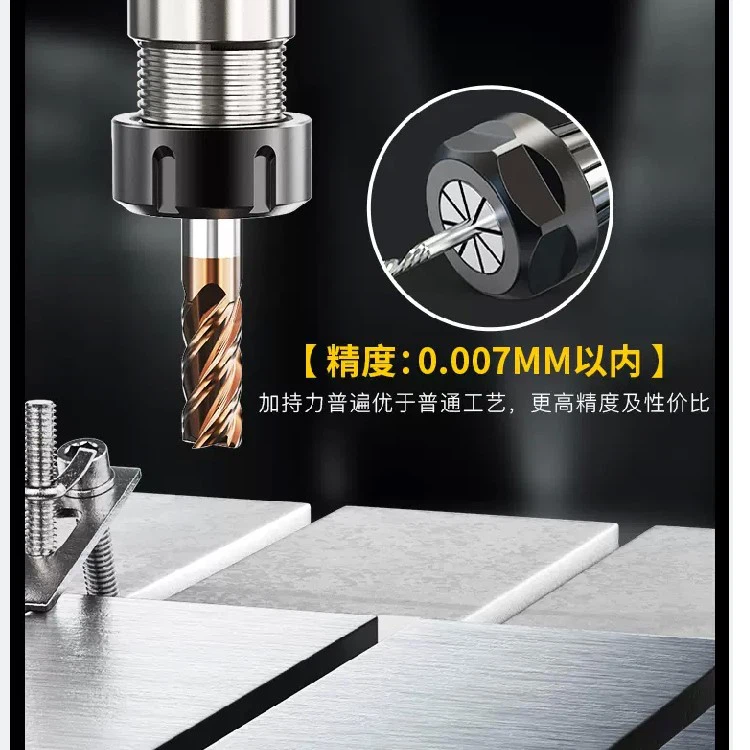
When discussing the fatigue resistance of an Er20 tool holder, it's important to consider the related components. For example, the Er20 Nut is an essential part of the tool - holding system. A properly tightened and high - quality nut can help to distribute the clamping force evenly on the tool holder, reducing the stress and improving its fatigue resistance.

Another related component is the power source. A 4kw Inverter can affect the machining process. If the inverter provides stable power, it can reduce the vibrations and fluctuations in the cutting forces, which in turn can be beneficial for the fatigue resistance of the tool holder.
Conclusion
In conclusion, the fatigue resistance of an Er20 tool holder is a complex but critical characteristic. It is influenced by factors such as material quality, heat treatment, design, and surface finish. Measuring fatigue resistance through testing methods allows us to ensure that our tool holders meet the highest standards. The importance of fatigue resistance in machining cannot be overstated, as it can lead to longer tool life, improved accuracy, and enhanced safety.
If you are in the market for high - quality Er20 tool holders with excellent fatigue resistance, we invite you to contact us for more information. Our team of experts is ready to assist you in finding the right solutions for your machining needs. Whether you have questions about our products or want to discuss a specific application, we are here to help. Let's start a conversation and explore how our Er20 tool holders can improve your machining operations.
References
- ASM Handbook Volume 19: Fatigue and Fracture. ASM International.
- Machining Handbook, 4th Edition. Industrial Press.


