

Hey there! As a supplier of plasma cutting machines, I often get asked about the maximum thickness these machines can cut. It's a super important question, especially if you're in the market for a plasma cutter. So, let's dive right in and explore this topic.
First off, what exactly is plasma cutting? Plasma cutting is a process that uses a high-velocity jet of ionized gas (plasma) to melt and blow away metal. It's a popular choice for cutting through various metals because it's fast, precise, and can handle a wide range of thicknesses.
The maximum cutting thickness of a plasma cutting machine depends on several factors. One of the most significant factors is the power of the machine. Generally speaking, the more powerful the plasma cutter, the thicker the metal it can cut. For example, a small, handheld plasma cutter might be able to cut through metal up to 1/4 inch (about 6.35 mm) thick. These are great for small projects and DIY jobs around the shop.
On the other hand, industrial-grade plasma cutting machines can handle much thicker metals. Some high-powered machines can cut through steel up to 6 inches (about 152.4 mm) thick! These heavy-duty machines are typically used in large manufacturing plants, shipyards, and other industrial settings where they need to cut through thick sheets of metal on a regular basis.

Another factor that affects the maximum cutting thickness is the type of metal being cut. Different metals have different melting points and conductivity, which can impact how easily they can be cut by a plasma cutter. For instance, aluminum is a highly conductive metal, so it can be cut more easily than some other metals. However, it also has a relatively low melting point, which means that the plasma arc needs to be carefully controlled to avoid overheating and warping the metal.
Steel is one of the most commonly cut metals with plasma cutting machines. It has a high melting point and good conductivity, making it a great candidate for plasma cutting. Most plasma cutters can handle mild steel quite well, but the maximum thickness will still depend on the power of the machine.
Stainless steel is another popular metal for plasma cutting. It has a higher melting point than mild steel, so it can be a bit more challenging to cut. However, with the right plasma cutter and settings, you can still achieve clean, precise cuts in stainless steel up to a certain thickness.
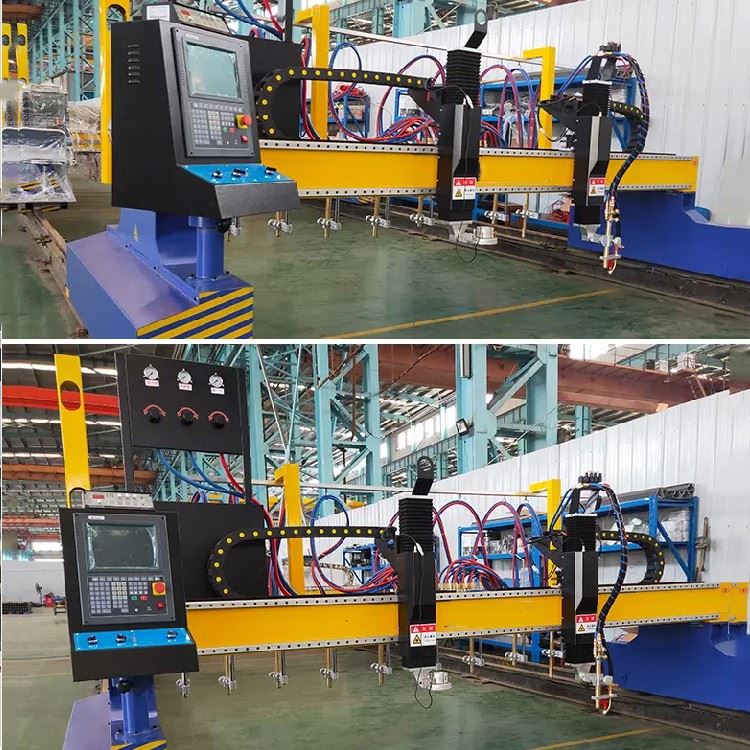
Now, let's talk about the different types of plasma cutting machines available. There are two main types: gantry CNC plasma flame cutting machines and flame plasma cutting machines.
The Gantry CNC Plasma Flame Cutting Machine is a highly advanced and precise machine. It uses computer numerical control (CNC) technology to control the movement of the cutting torch, allowing for accurate and repeatable cuts. These machines are often used for large-scale production and can handle a wide range of cutting thicknesses, depending on their power rating.
The Flame Plasma Cutting Machine combines the power of a plasma arc with a flame cutting torch. This allows for faster cutting speeds and the ability to cut through thicker metals. Flame plasma cutting machines are commonly used in industries where high productivity is essential, such as in the construction and automotive industries.
When choosing a plasma cutting machine, it's important to consider your specific needs and requirements. If you're only going to be cutting thin sheets of metal for small projects, a handheld or benchtop plasma cutter might be sufficient. However, if you need to cut through thick metals on a regular basis, you'll want to invest in a more powerful, industrial-grade machine.
It's also a good idea to look for a plasma cutting machine that offers adjustable settings. This will allow you to fine-tune the cutting parameters based on the type and thickness of the metal you're cutting, as well as the specific requirements of your project.
In addition to the power and type of the machine, you should also consider other features such as the quality of the plasma arc, the ease of use, and the maintenance requirements. A high-quality plasma arc will result in cleaner, more precise cuts, while a machine that's easy to use and maintain will save you time and hassle in the long run.
So, if you're in the market for a plasma cutting machine and have questions about the maximum cutting thickness or any other aspect of plasma cutting, don't hesitate to reach out to us. We're here to help you find the right machine for your needs and can provide you with all the information and support you need to make an informed decision.
Whether you're a small business owner looking to add a plasma cutting machine to your workshop or a large industrial company in need of a high-capacity machine, we have a wide range of plasma cutting machines to choose from. Our team of experts can help you select the right machine based on your specific requirements and budget.
In conclusion, the maximum thickness a plasma cutting machine can cut depends on several factors, including the power of the machine, the type of metal being cut, and the specific settings and parameters used. By understanding these factors and choosing the right plasma cutting machine for your needs, you can achieve clean, precise cuts in a wide range of metals and thicknesses.
If you're interested in learning more about our plasma cutting machines or have any questions about plasma cutting in general, feel free to contact us. We'd love to have a chat with you and help you find the perfect solution for your cutting needs. Let's start a conversation and see how we can work together to take your metal cutting projects to the next level!
References
- "Plasma Cutting Technology Handbook"
- Industry reports on metal cutting processes and equipment


