

Hey there! As a supplier of laser machine parts, I've gotten a ton of questions about the noise levels of different components. It's a big deal, especially for those using these machines in workspaces where noise can be a real pain. So, I thought I'd break down the noise levels of some common laser machine parts to help you make an informed decision.
Let's start with the Laser Cutting Head. This is one of the most crucial parts of a laser machine, responsible for focusing the laser beam precisely on the material. The noise level of a laser cutting head can vary depending on a few factors. Generally, modern laser cutting heads are designed to operate relatively quietly. They're built with advanced technology that minimizes vibrations and noise during the cutting process.
Most high - end laser cutting heads produce noise levels in the range of 60 - 70 decibels (dB). To put that in perspective, normal conversation usually hovers around 60 dB. So, it's not overly loud, but you'll definitely notice it in a quiet workspace. However, some older or lower - quality models might be a bit noisier, reaching up to 75 dB or so. This increase in noise could be due to issues like loose components, improper alignment, or sub - standard bearings.
Next up is the CO2 Cutting Head. CO2 lasers are widely used in the industry for cutting a variety of materials, from wood to acrylic. The CO2 cutting head has its own unique noise characteristics. These heads often generate a low - frequency hum during operation.
The noise level of a CO2 cutting head typically falls between 65 - 75 dB. The main source of noise here is the gas flow within the laser tube and the cooling system. The gas flow creates a constant hissing sound, while the cooling fans can add a bit of whirring noise. If you're using a CO2 laser machine in a small workshop, this noise can be a bit bothersome, but it's still within an acceptable range for most industrial environments.
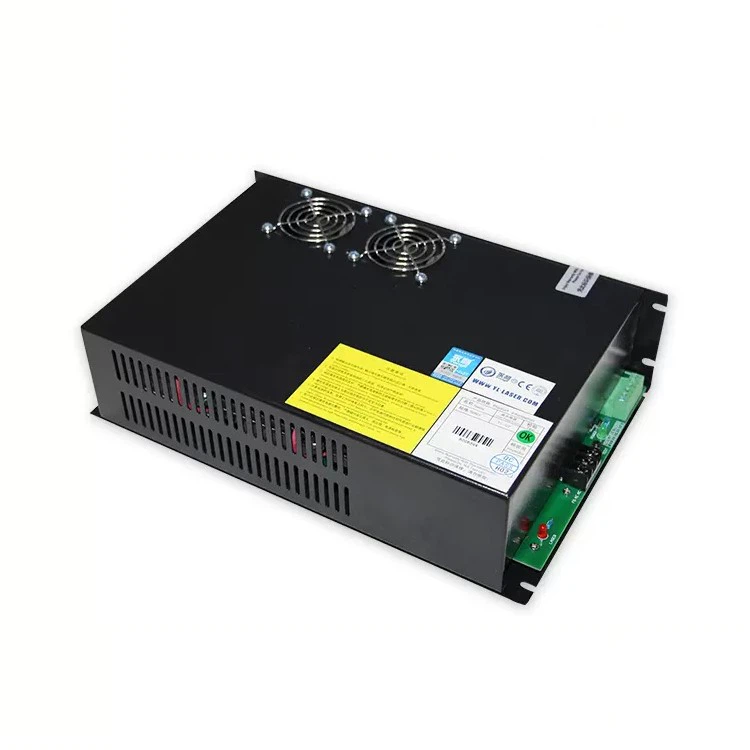
Now, let's talk about the Laser Power Supply. This part is responsible for providing the necessary electrical energy to the laser. A stable power supply is essential for the proper functioning of the laser, but it can also be a source of noise.
The noise level of a laser power supply can vary significantly depending on its design and quality. High - quality power supplies are usually well - shielded and designed to minimize electromagnetic interference and noise. These can operate at relatively low noise levels, around 50 - 60 dB. That's about as quiet as a refrigerator running in the background.
On the other hand, cheaper or poorly designed power supplies can be quite noisy. They might produce a high - pitched whining or buzzing sound, reaching up to 80 dB or more. This excessive noise can be a sign of internal issues, such as loose components or overheating. If you notice a sudden increase in the noise level of your laser power supply, it's a good idea to have it checked out by a professional.
There are also other parts of the laser machine that can contribute to the overall noise level. For example, the motion control system, which moves the cutting head or the material being cut, can generate noise. Stepper motors, which are commonly used in motion control, can produce a clicking or rattling sound as they move. The noise level from the motion control system can range from 55 - 70 dB, depending on the speed and precision of the movement.
The cooling system is another major contributor to the noise. Lasers generate a lot of heat during operation, and they need efficient cooling to prevent damage. Water - cooled systems tend to be quieter than air - cooled ones. Air - cooled systems rely on fans to dissipate heat, and these fans can be quite loud, especially if they're running at high speeds. The noise level of an air - cooled system can reach up to 80 dB or more, while a well - designed water - cooled system might stay below 65 dB.
So, why does the noise level matter? Well, for one, excessive noise can be a health hazard. Prolonged exposure to high - decibel noise can lead to hearing loss, stress, and other health problems. In a workplace, it can also affect productivity. If workers are constantly distracted by loud noise, they're less likely to focus on their tasks.

Moreover, in some areas, there are regulations regarding noise levels in industrial settings. You don't want to get in trouble with the authorities for operating a noisy laser machine. That's why it's important to choose laser machine parts that are relatively quiet.
If you're in the market for laser machine parts and noise is a concern for you, we've got you covered. We offer a wide range of high - quality laser machine parts that are designed to operate quietly. Our Laser Cutting Head, CO2 Cutting Head, and Laser Power Supply are all engineered with noise reduction in mind.
We understand that every customer's needs are different, and we're here to help you find the right parts for your specific requirements. Whether you're running a small workshop or a large industrial facility, we can provide you with parts that not only perform well but also keep the noise level in check.
If you're interested in learning more about our products or have any questions about noise levels or other aspects of laser machine parts, don't hesitate to reach out. We're always happy to have a chat and help you make the best decision for your business. Just start a conversation with us, and we'll guide you through the selection process.
References
- Industrial Noise Control Handbook, various authors
- Laser Technology: Principles and Applications, by John C. Ion


