

Hey there! As a supplier of Laser Power Supply, I've been in the laser industry for quite a while, and I often get asked about the power supply requirements for high-power lasers. So, I thought I'd share some insights on this topic.

First off, let's talk about what makes a laser "high-power." Generally, lasers with power outputs of several hundred watts or more are considered high-power. These lasers are used in a variety of applications, such as industrial cutting, welding, and engraving, as well as in scientific research and medical treatments.
Voltage and Current Requirements
One of the most important aspects of power supply requirements for high-power lasers is the voltage and current. High-power lasers typically require a high voltage to generate the necessary electrical discharge to produce the laser beam. The voltage requirements can vary widely depending on the type of laser and its power output. For example, some CO2 lasers may require voltages in the range of several thousand volts, while solid-state lasers may operate at lower voltages but higher currents.
The current requirements are also crucial. A stable and consistent current is needed to ensure the laser operates efficiently and produces a high-quality beam. Fluctuations in the current can lead to variations in the laser's output power, which can affect the quality of the cutting, welding, or other processes. That's why our Laser Power Supply is designed to provide a precise and stable current to the laser.
Power Stability
Power stability is another key factor. High-power lasers are often used in precision applications, and any instability in the power supply can have a significant impact on the results. For instance, in laser cutting, even a small fluctuation in power can cause uneven cuts or burn marks on the material. Our power supplies are engineered to maintain a high level of power stability, ensuring that the laser performs consistently over time.
Cooling Requirements
High-power lasers generate a lot of heat, and proper cooling is essential to prevent damage to the laser components and to maintain optimal performance. The power supply also plays a role in the cooling system. Some power supplies are designed to work in conjunction with external cooling systems, such as water chillers or air coolers. These cooling systems help remove the heat generated by the laser and the power supply itself.
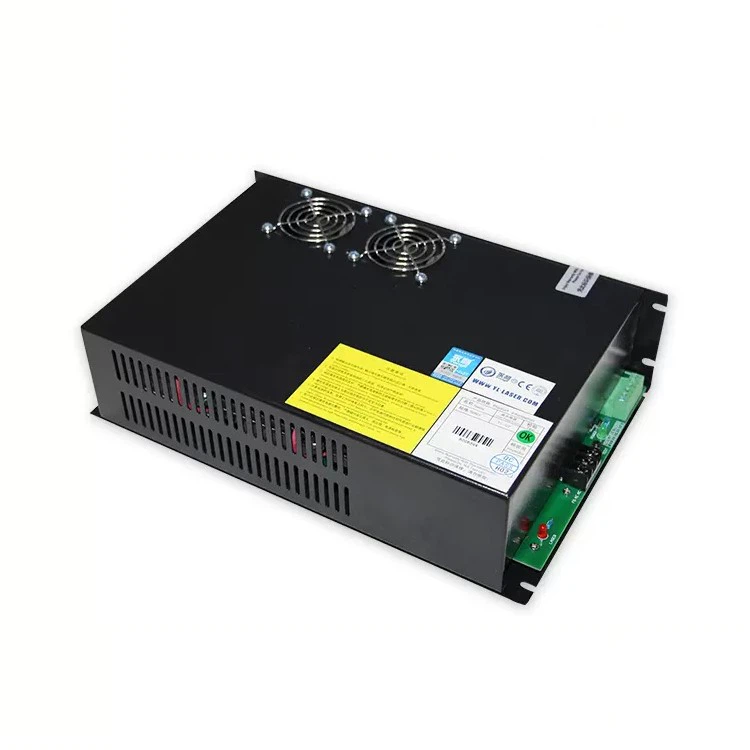
In addition to external cooling, the power supply may also have its own internal cooling mechanisms, such as fans or heat sinks. These help dissipate the heat generated within the power supply and ensure its reliability.
Compatibility with Laser Types
Different types of lasers have different power supply requirements. For example, CO2 lasers, which are commonly used in industrial cutting and engraving, have specific electrical characteristics that need to be matched by the power supply. Our Laser Power Supply is designed to be compatible with a wide range of laser types, including CO2 lasers, solid-state lasers, and fiber lasers.
When it comes to CO2 lasers, they often require a power supply that can provide a high-voltage, low-frequency electrical discharge. This is because CO2 lasers operate by exciting the CO2 gas molecules in the laser tube, and the specific electrical parameters are crucial for this process. Our power supplies are tailored to meet these requirements, ensuring optimal performance of CO2 lasers.
Solid-state lasers, on the other hand, may require a different set of power supply characteristics. They typically operate at lower voltages but higher currents, and they may need a power supply that can provide a fast and precise control of the current. Our power supplies are designed to be flexible and adaptable to the specific needs of different solid-state lasers.
Safety Features
Safety is always a top priority when dealing with high-power lasers and their power supplies. Our Laser Power Supply is equipped with a range of safety features to protect both the operator and the equipment. These features include over-voltage protection, over-current protection, and short-circuit protection.
Over-voltage protection prevents the power supply from delivering a voltage that is higher than the rated value, which could damage the laser or other components. Over-current protection ensures that the current does not exceed a safe level, which can also cause damage to the equipment. Short-circuit protection automatically shuts off the power supply in the event of a short circuit, preventing any potential hazards.
Integration with Laser Systems
A high-power laser system is not just about the laser and the power supply; it also includes other components such as the CO2 Cutting Head or the Laser Cutting Head. The power supply needs to be able to integrate seamlessly with these components to ensure the overall system operates smoothly.
Our power supplies are designed with this in mind. They can be easily integrated with different types of cutting heads and other laser system components. This allows for a more efficient and reliable laser system, reducing the risk of compatibility issues and downtime.
Customization Options
We understand that every customer's needs are different, and that's why we offer customization options for our Laser Power Supply. Whether you need a power supply with specific voltage and current requirements, or you have unique cooling or safety needs, we can work with you to develop a customized solution.
This customization capability gives our customers the flexibility to design a laser system that meets their exact requirements, whether it's for a small-scale workshop or a large industrial production line.
Conclusion
In conclusion, the power supply requirements for high-power lasers are complex and multifaceted. Voltage, current, power stability, cooling, compatibility, safety, and integration are all important factors to consider. As a supplier of Laser Power Supply, we are committed to providing high-quality, reliable, and customizable power supplies that meet the diverse needs of our customers.
If you're in the market for a high-power laser power supply or have any questions about the power supply requirements for your laser system, don't hesitate to reach out. We're here to help you find the best solution for your application. Whether you're looking to upgrade your existing laser system or build a new one from scratch, we can provide the expertise and support you need.
References
- Laser Technology Handbook, Various Authors
- Industrial Laser Applications, Industry Publications


