

PID control, standing for Proportional - Integral - Derivative control, is a cornerstone in the field of servo motor control. As a servo motor supplier, I've witnessed firsthand the transformative power of PID control in optimizing the performance of servo motors across various industries. In this blog, I'll delve into what PID control is, how it works, and its significance in the operation of servo motors.
Understanding the Basics of PID Control
At its core, PID control is a feedback control mechanism that calculates an error value as the difference between a desired setpoint and the current process variable. The controller then attempts to minimize this error by adjusting the control input to the system. In the context of a servo motor, the setpoint could be a specific position, speed, or torque, while the process variable is the actual position, speed, or torque of the motor.
The three components of PID control - Proportional, Integral, and Derivative - each play a unique role in shaping the control action:
-
Proportional (P) Control: This component generates an output that is proportional to the current error. A larger error results in a larger control output, driving the system towards the setpoint. However, proportional control alone can lead to a steady - state error, where the system never quite reaches the setpoint. For example, if the setpoint for a servo motor's position is 100 degrees and the current position is 90 degrees, the proportional controller will generate an output that is proportional to the 10 - degree error.
-
Integral (I) Control: The integral component accumulates the error over time and generates an output based on this accumulated error. It helps to eliminate the steady - state error by continuously adjusting the control output until the error is zero. In the servo motor example, if there is a small but persistent error in the motor's position, the integral controller will gradually increase the control output to correct this error.

-
Derivative (D) Control: The derivative component calculates the rate of change of the error. It anticipates future error trends and provides a control output that counteracts rapid changes in the error. This helps to improve the stability of the system and reduce overshoot. For instance, if the servo motor is approaching the setpoint too quickly, the derivative controller will reduce the control output to slow down the motor and prevent it from overshooting the setpoint.
How PID Control Works in a Servo Motor System
In a servo motor system, the PID controller continuously monitors the motor's performance and adjusts the control signals to the motor driver. The process typically involves the following steps:
- Setpoint Definition: The user defines the desired position, speed, or torque of the servo motor. This setpoint serves as the target for the PID controller.
- Error Calculation: The PID controller compares the current position, speed, or torque of the motor (the process variable) with the setpoint to calculate the error.
- Control Output Calculation: Based on the error, the PID controller calculates the control output using the proportional, integral, and derivative components. The control output is then sent to the motor driver.
- Motor Driver Action: The motor driver receives the control output and adjusts the electrical power supplied to the servo motor accordingly. This causes the motor to move towards the setpoint.
- Feedback Loop: The motor's actual position, speed, or torque is continuously measured and fed back to the PID controller. The controller then repeats the error calculation and control output calculation steps to ensure that the motor stays on track.
Significance of PID Control in Servo Motor Applications
PID control offers several advantages in servo motor applications:
- Precision Control: By continuously adjusting the control output based on the error, PID control enables precise positioning, speed control, and torque control of servo motors. This is crucial in applications such as robotics, CNC machining, and automation, where high precision is required. For example, in a CNC machining center, a servo motor controlled by a PID controller can accurately position the cutting tool to create complex parts with tight tolerances.
- Stability: The derivative component of PID control helps to dampen oscillations and prevent overshoot, ensuring the stability of the servo motor system. This is particularly important in high - speed applications, where instability can lead to poor performance and even damage to the motor.
- Adaptability: PID controllers can be tuned to adapt to different operating conditions and system dynamics. By adjusting the proportional, integral, and derivative gains, the controller can be optimized for specific applications, ensuring optimal performance in a variety of environments.
Our Servo Motors and PID Control
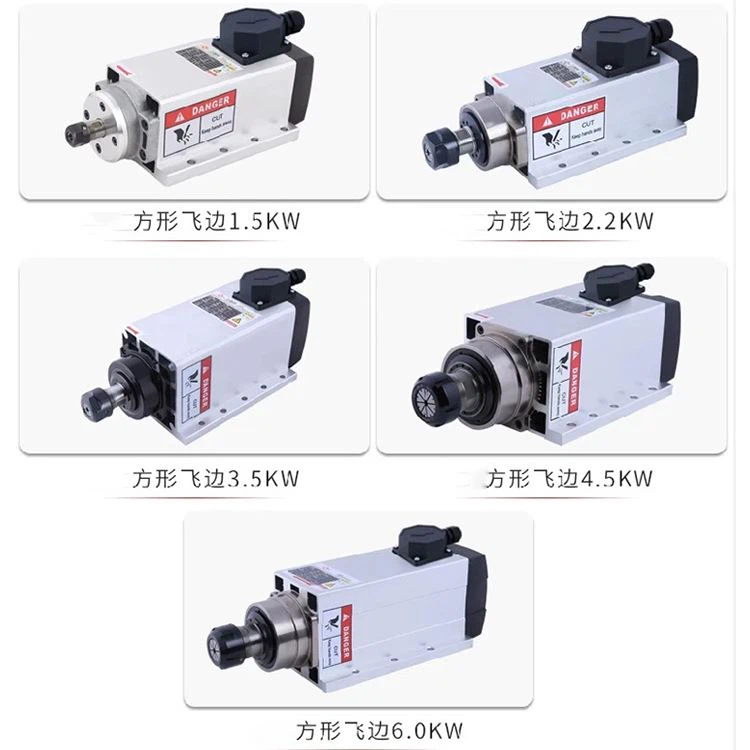
As a servo motor supplier, we understand the importance of PID control in delivering high - performance servo motors. Our servo motors are equipped with advanced PID controllers that are carefully tuned to provide precise and stable control. Whether you need a servo motor for a 3.2kw Water Cooled Spindle, a 4.5kw Air Cooling Spindle, or for use with an Engraving Milling Cutter, our products are designed to meet your specific requirements.
We offer a wide range of servo motors with different power ratings, torque capabilities, and speed ranges. Our technical team is always available to provide support and guidance on PID tuning and system integration, ensuring that you get the most out of your servo motor system.
Contact Us for Procurement
If you're in the market for high - quality servo motors with advanced PID control capabilities, we'd love to hear from you. Whether you're a small - scale manufacturer or a large - scale industrial enterprise, we can provide you with the right servo motor solutions for your applications. Contact us today to start a discussion about your procurement needs and how our servo motors can enhance the performance of your systems.
References
- Åström, K. J., & Murray, R. M. (2010). Feedback Systems: An Introduction for Scientists and Engineers. Princeton University Press.
- Dorf, R. C., & Bishop, R. H. (2017). Modern Control Systems. Pearson.
- Franklin, G. F., Powell, J. D., & Emami - Naeini, A. (2015). Feedback Control of Dynamic Systems. Pearson.


