

Hey there! As a servo motor supplier, I often get asked about servo motors, and one question that pops up a lot is “What is the torque of a servo motor?” Well, let's dive right into it and break it down in a way that's easy to understand.
First off, torque is basically a measure of the rotational force that a servo motor can generate. You can think of it as how much 'oomph' the motor has to turn something. It's like when you're trying to open a stubborn jar lid. The more force you can apply to turn the lid, the better your chances of getting it open. In the world of servo motors, torque is what makes them useful for all sorts of applications, from robotics to industrial machinery.
There are two main types of torque we usually talk about when it comes to servo motors: static torque and dynamic torque.
Static torque is the amount of torque the motor can produce when it's not moving, or when it's holding a load in a fixed position. It's like when you're trying to hold a heavy weight still. You need to use a certain amount of force to keep it from falling. In a servo motor, static torque is important for applications where the motor needs to hold a position against an external force, like in a robotic arm that's holding a tool.
Dynamic torque, on the other hand, is the torque the motor can produce while it's in motion. This is crucial for applications where the motor needs to accelerate or decelerate a load quickly. For example, in a CNC machine, the servo motor needs to be able to move the cutting tool rapidly and precisely. Dynamic torque determines how fast the motor can change its speed and how well it can handle sudden changes in the load.
Now, how is torque measured? The unit of measurement for torque is usually the Newton - meter (N·m) in the metric system. You might also see it measured in pound - feet (lb - ft) in some countries that use the imperial system. When you're looking at the specifications of a servo motor, the torque rating will tell you how much rotational force the motor can provide.
The torque of a servo motor depends on several factors. One of the most important factors is the motor's design and construction. The number of windings in the motor's coils, the strength of the magnetic field, and the size of the motor all play a role in determining how much torque it can produce. Generally, larger motors with more powerful magnets and more windings will have higher torque ratings.

Another factor is the current flowing through the motor. The more current you supply to the motor, the more torque it can generate. However, there's a limit to how much current a motor can handle. If you supply too much current, the motor can overheat and get damaged. That's why it's important to choose a servo motor with a torque rating that matches your application's requirements.
Let's talk about some real - world applications of servo motors and how torque matters in each of them.
In robotics, servo motors are used to control the movement of the robot's joints. Different joints may require different levels of torque depending on the size and weight of the parts they need to move. For example, a large industrial robot that's used for lifting heavy objects will need servo motors with high torque ratings. On the other hand, a small educational robot might only need motors with lower torque.
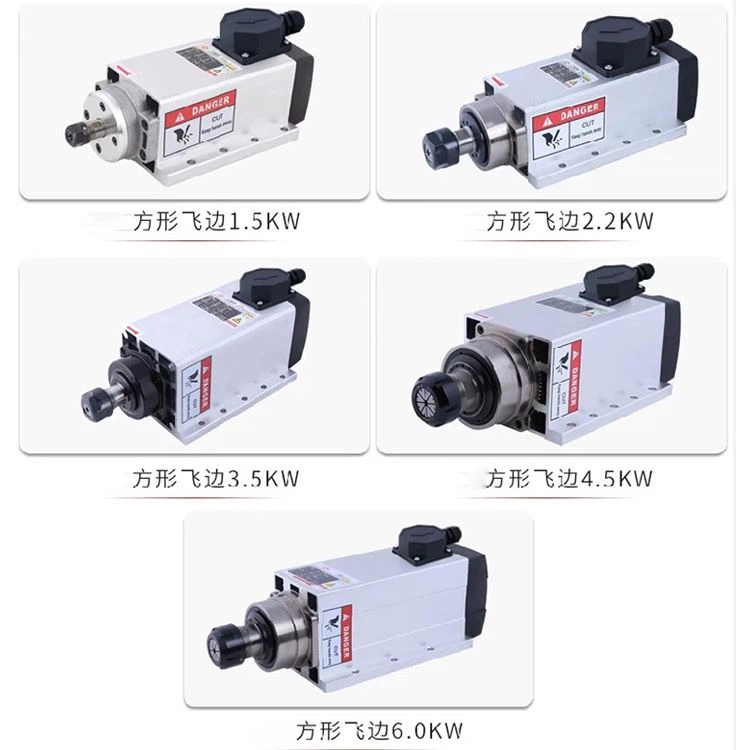
In CNC machines, servo motors are used to control the movement of the cutting tools. The torque of the servo motor determines how fast the tool can move and how well it can cut through different materials. For example, if you're cutting a hard material like steel, you'll need a servo motor with enough torque to drive the cutting tool through the metal. Check out our 4.5kw Air Cooling Spindle and 3.2kw Water Cooled Spindle which work great with our high - torque servo motors for precise CNC operations.
In engraving machines, servo motors are used to control the movement of the engraving head. The torque of the motor affects how precisely the head can move and how well it can engrave different patterns. Our Engraving Machine Handle is designed to work in harmony with our servo motors to provide smooth and accurate engraving.
When you're choosing a servo motor for your application, it's important to calculate the torque requirements accurately. You need to consider the weight of the load, the speed at which you need to move the load, and the acceleration and deceleration requirements. If you choose a motor with too little torque, it won't be able to handle the load properly, and the system may not work as expected. On the other hand, if you choose a motor with too much torque, you'll end up paying more for a motor that's more powerful than you actually need.
As a servo motor supplier, I've seen many customers make the mistake of not considering the torque requirements carefully. That's why we're here to help. We have a wide range of servo motors with different torque ratings to suit various applications. Whether you're working on a small DIY project or a large industrial application, we can help you find the right servo motor for your needs.
If you're still not sure which servo motor is right for you, don't worry. Our team of experts is always ready to assist you. We can help you calculate the torque requirements for your application and recommend the best motor for your specific needs.
So, if you're in the market for a servo motor, or if you have any questions about torque or servo motors in general, feel free to reach out to us. We're here to make sure you get the best - performing servo motor for your project. Contact us today and let's start a conversation about your servo motor needs. We're looking forward to working with you!
References:
- "Servo Motors and Motion Control" by Peter C. Senning
- "Electric Motors and Drives: Fundamentals, Types and Applications" by Austin Hughes and Bill Drury


