Hey there! As a supplier of 4kW inverters, I often get asked if these inverters can be used for small businesses. Well, let's dive right in and explore this topic.
First off, what exactly is a 4kW inverter? In simple terms, an inverter is a device that converts direct current (DC) to alternating current (AC). A 4kW inverter can handle a power output of up to 4 kilowatts. This might not sound like a huge amount, but for a lot of small businesses, it can be just the ticket.
Let's think about some common small - business scenarios. Take a small coffee shop, for example. The main energy - consuming appliances in a coffee shop are coffee machines, refrigerators, and lighting. A typical commercial coffee machine might use around 1 - 2kW, a small refrigerator around 0.5 - 1kW, and the lighting might add up to another 0.5 - 1kW. All in all, the total power consumption during normal operation could easily be within the 4kW range. So, a 4kW inverter could power a small coffee shop without any major issues.
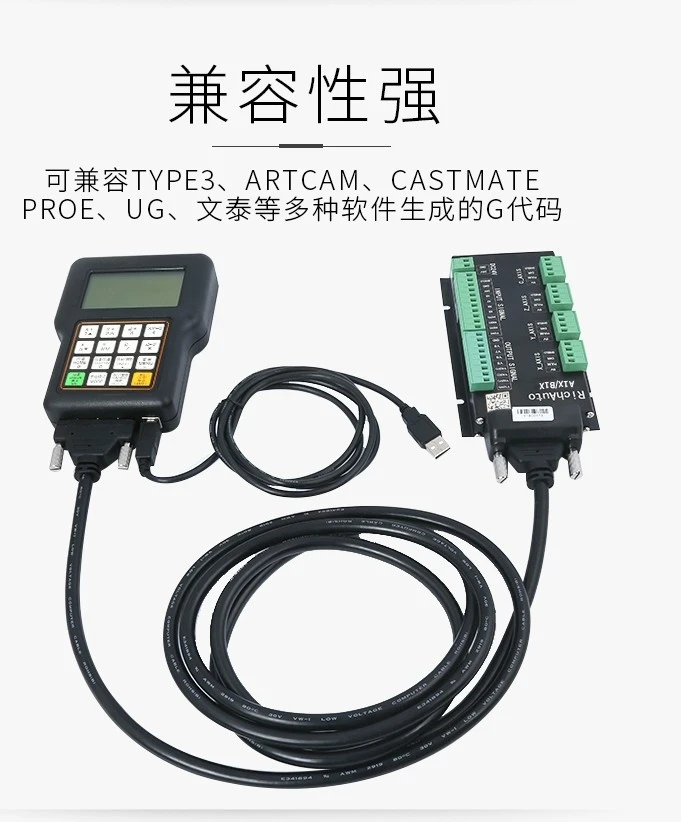
Now, let's consider a small woodworking shop. They often use tools like Servo Motor and Engraving Machine Handle. A servo motor might consume a few hundred watts, and an engraving machine handle is relatively low - power. Even if they also have a 3.2kw Water Cooled Spindle, as long as not all the tools are running at full power simultaneously, a 4kW inverter can handle the load.
However, it's not all smooth sailing. There are some factors to consider before deciding if a 4kW inverter is right for your small business. One of the most important things is the startup power, also known as inrush current. Some appliances, like refrigerators and motors, require a much higher power surge when they start up than they do during normal operation. For example, a refrigerator might need 2 - 3 times its normal running power to start. If your small business has a lot of such appliances, the 4kW inverter might struggle to handle the inrush current, even if the total running power is within its capacity.
Another factor is the type of load. Inverters are generally designed to handle either resistive loads (like heaters and incandescent lights) or inductive loads (like motors and transformers). Some inverters are better at handling one type of load over the other. You need to make sure that the 4kW inverter you choose can handle the specific types of loads in your small business.

Battery capacity is also crucial. If you're using the inverter in an off - grid or backup power system, you'll need a battery bank to store the DC power. The size of the battery bank should be large enough to supply the inverter with enough power for the duration you need. A 4kW inverter can drain a small battery bank pretty quickly, so you'll need to invest in a proper - sized battery bank to ensure continuous operation.
Let's talk about the benefits of using a 4kW inverter for a small business. One of the biggest advantages is cost - savings. Compared to larger inverters, 4kW inverters are generally more affordable. They also consume less power themselves, which means lower operating costs. Additionally, they're more compact and easier to install, which can save you on installation costs as well.
For small businesses that are looking to go green, a 4kW inverter can be a great addition to a solar power system. You can install solar panels on your business premises and use the inverter to convert the DC power generated by the panels into AC power for your business. This not only reduces your reliance on the grid but also helps you save on electricity bills in the long run.
In conclusion, a 4kW inverter can definitely be used for a small business, but it depends on your specific needs and circumstances. If your business has relatively low power requirements, and you can manage the inrush current and other factors we've discussed, then a 4kW inverter is a viable option.
If you're interested in learning more about our 4kW inverters or think they might be a good fit for your small business, don't hesitate to reach out. We're here to help you make the right decision and get the best power solution for your business.
References
General knowledge about electrical systems and small - business power requirements.
Industry standards and guidelines for inverters and electrical appliances.