

Hey there! As a supplier of laser power supplies, I've been in the game for quite a while, and I've seen firsthand how crucial it is to have a well - designed pulsed laser power supply. In this blog, I'm gonna share some tips on how to design one.
Understanding the Basics
First things first, you need to understand what a pulsed laser power supply is and what it does. A pulsed laser power supply is designed to provide short, high - energy pulses of electrical power to a laser. These pulses are what make the laser emit short bursts of intense light, which can be used for various applications like laser cutting, engraving, and even medical treatments.
The key parameters you need to consider are pulse width, pulse frequency, and peak power. Pulse width refers to the duration of each electrical pulse. Shorter pulse widths usually result in higher peak powers and are better for applications that require precision, like micro - machining. Pulse frequency is the number of pulses per second. Higher frequencies can increase the overall processing speed but may also require more power. Peak power is the maximum power delivered during each pulse.
Selecting the Right Components
Now, let's talk about the components. The heart of a pulsed laser power supply is the power switch. There are different types of power switches, such as MOSFETs (Metal - Oxide - Semiconductor Field - Effect Transistors) and IGBTs (Insulated - Gate Bipolar Transistors). MOSFETs are great for low - power, high - frequency applications because they have fast switching speeds. IGBTs, on the other hand, can handle higher currents and are better suited for high - power applications.
You also need a reliable energy storage component, like a capacitor. Capacitors store electrical energy and release it in a short burst when the power switch is triggered. The capacitance value and voltage rating of the capacitor depend on the desired pulse width and peak power.
Another important component is the pulse control circuit. This circuit is responsible for generating the control signals that trigger the power switch at the right time. It can be as simple as a basic oscillator circuit or as complex as a microcontroller - based system, depending on the requirements of your pulsed laser.
Circuit Design
When it comes to circuit design, you need to pay attention to the power flow and the electrical isolation. The power flow should be optimized to minimize losses and ensure efficient energy transfer from the power source to the laser. You can use techniques like impedance matching to make sure that the power supply and the laser are well - matched in terms of electrical impedance.
Electrical isolation is also crucial, especially in high - voltage applications. You can use transformers or opto - isolators to isolate the control circuit from the high - voltage power circuit. This helps to protect the control circuit from electrical interference and ensures the safety of the operators.
Thermal Management
Heat is the enemy of any electronic device, and a pulsed laser power supply is no exception. During the operation, the power switch and other components can generate a significant amount of heat. If not properly managed, this heat can damage the components and reduce the lifespan of the power supply.
You need to design an effective thermal management system. This can include heat sinks, fans, or even liquid cooling systems. Heat sinks are passive devices that absorb and dissipate heat from the components. Fans can be used to increase the airflow over the heat sinks, enhancing the cooling effect. Liquid cooling systems are more complex but can provide better cooling performance for high - power applications.
Integration with Other Laser Components
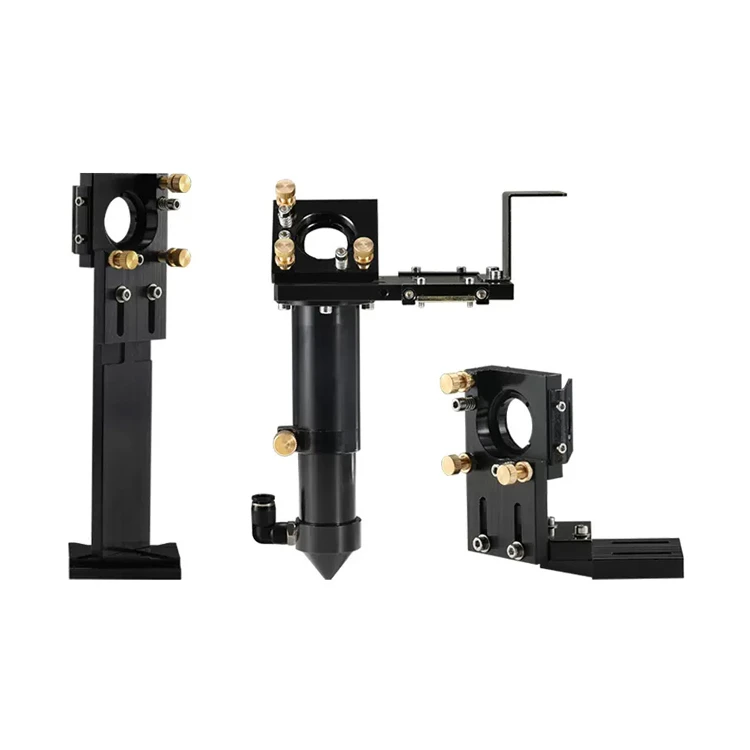
A pulsed laser power supply doesn't work in isolation. It needs to be integrated with other laser components, such as the Laser Tube, Laser Cutting Head, and CO2 Cutting Head.
The power supply needs to be compatible with the electrical characteristics of the laser tube. For example, different laser tubes may require different voltage and current levels. You also need to ensure that the power supply can provide the right pulse parameters to drive the laser tube effectively.
When it comes to the cutting head, the power supply should be able to work in harmony with the control system of the cutting head. This ensures that the laser beam is focused and directed accurately for precise cutting or engraving.
Testing and Optimization
Once you've designed your pulsed laser power supply, it's time to test it. You can use oscilloscopes and power analyzers to measure the pulse width, frequency, and peak power. You should also test the power supply under different operating conditions to make sure that it can perform reliably.

If you find any issues during the testing, don't worry. You can optimize the design by adjusting the component values, modifying the circuit layout, or improving the thermal management. Keep testing and optimizing until you get the desired performance.
Conclusion
Designing a pulsed laser power supply is a challenging but rewarding task. By understanding the basics, selecting the right components, designing the circuit carefully, managing the heat, integrating with other laser components, and testing and optimizing the design, you can create a high - performance pulsed laser power supply.
If you're in the market for a pulsed laser power supply or have any questions about the design process, feel free to reach out to us. We're here to help you find the best solution for your laser applications. Whether you're a small - scale workshop or a large - scale manufacturing facility, we can provide you with reliable and efficient laser power supplies. Contact us for more information and let's start a great business relationship!
References
- "Laser Electronics" by John Wilson and Jim Hawkes
- "Power Electronics: Converters, Applications, and Design" by Ned Mohan, Tore M. Undeland, and William P. Robbins


