

A servo motor is a crucial component in many industrial and robotic applications, known for its high precision and controllability. As a Servo Motor supplier, I often receive inquiries about the step response of servo motors. In this blog, I'll delve into what the step response of a servo motor is, why it matters, and how it impacts various applications.
Understanding the Basics of a Servo Motor
Before we dive into the step response, let's briefly review what a Servo Motor is. A servo motor is a type of motor that can precisely control its position, velocity, and acceleration. It consists of a motor, a feedback device (such as an encoder), and a controller. The feedback device continuously sends information about the motor's actual position back to the controller, which then adjusts the motor's input to ensure it reaches and maintains the desired position.
What is Step Response?
The step response of a servo motor refers to how the motor responds when it receives a sudden change in its input command, known as a step input. A step input is a mathematical function that represents an instantaneous change from one constant value to another. For example, if a servo motor is initially at rest and then suddenly receives a command to move to a new position, this is equivalent to a step input.

When a step input is applied to a servo motor, the motor doesn't immediately reach the desired position. Instead, it goes through a transient period where its output (position, velocity, or acceleration) changes over time. The step response curve shows how the motor's output evolves from its initial state to the final steady - state value.
Key Parameters of the Step Response
- Rise Time: This is the time it takes for the motor's output to rise from a specified low value (usually 10% of the final value) to a specified high value (usually 90% of the final value). A shorter rise time indicates that the motor can respond more quickly to the step input. In applications where fast positioning is required, such as in high - speed pick - and - place robots, a servo motor with a short rise time is highly desirable.
- Settling Time: The settling time is the time it takes for the motor's output to reach and stay within a specified error band (usually ±2% or ±5% of the final value) around the steady - state value. It represents the time required for the transient effects to die out and the motor to reach a stable condition. In precision manufacturing processes, such as CNC machining, a short settling time is crucial to ensure accurate and repeatable results.
- Overshoot: Overshoot occurs when the motor's output exceeds the final steady - state value during the transient period. It is usually expressed as a percentage of the final value. A small amount of overshoot may be acceptable in some applications, but excessive overshoot can lead to instability and oscillations. For example, in a camera gimbal system, overshoot can cause the camera to shake and produce blurry images.
- Steady - State Error: This is the difference between the desired value (the step input) and the actual value of the motor's output after the transient period has ended. A servo motor with a small steady - state error is more accurate and can better track the input command. In applications like automated guided vehicles (AGVs), where precise positioning is essential, minimizing the steady - state error is of utmost importance.
Factors Affecting the Step Response
- Motor Characteristics: The design and construction of the servo motor itself play a significant role in its step response. Motors with higher torque - to - inertia ratios generally have better dynamic performance, as they can accelerate and decelerate more quickly. For example, a brushless servo motor may have a better step response compared to a brushed servo motor due to its lower friction and higher efficiency.
- Controller Tuning: The parameters of the motor controller, such as the proportional, integral, and derivative (PID) gains, have a major impact on the step response. Proper tuning of these parameters can optimize the rise time, settling time, overshoot, and steady - state error. However, incorrect tuning can lead to poor performance, such as excessive overshoot or instability.
- Load Conditions: The load connected to the servo motor can also affect its step response. A heavy load increases the inertia that the motor has to overcome, which can slow down the motor's response and increase the settling time. Additionally, if the load has a non - linear characteristic, such as a variable friction or a spring - like behavior, it can further complicate the step response.
Importance of Step Response in Different Applications
- Robotics: In robotic applications, the step response of servo motors is critical for achieving fast and accurate movements. Robots need to be able to quickly respond to changes in their environment and perform tasks with high precision. For example, in a collaborative robot working alongside human workers, a servo motor with a good step response can ensure smooth and safe interactions.
- CNC Machining: In CNC machines, servo motors are used to control the movement of the cutting tools. A servo motor with a short rise time and settling time can improve the machining speed and accuracy. The ability to quickly and accurately position the tool reduces the machining time and improves the surface finish of the workpiece.
- Automotive Industry: Servo motors are used in various automotive applications, such as power steering systems and electronic throttle control. A good step response is essential for providing a smooth and responsive driving experience. For example, in an electric power steering system, the servo motor needs to quickly adjust the steering assist based on the driver's input.
Related Products in Our Catalog
As a Servo Motor supplier, we also offer other related products that can enhance the performance of your servo motor systems. One of our popular products is the M860H Stepper Motor Driver. This driver is designed to work with stepper motors and can provide precise control over the motor's speed and torque. It has advanced features such as micro - stepping, which can improve the motor's smoothness and reduce vibration.
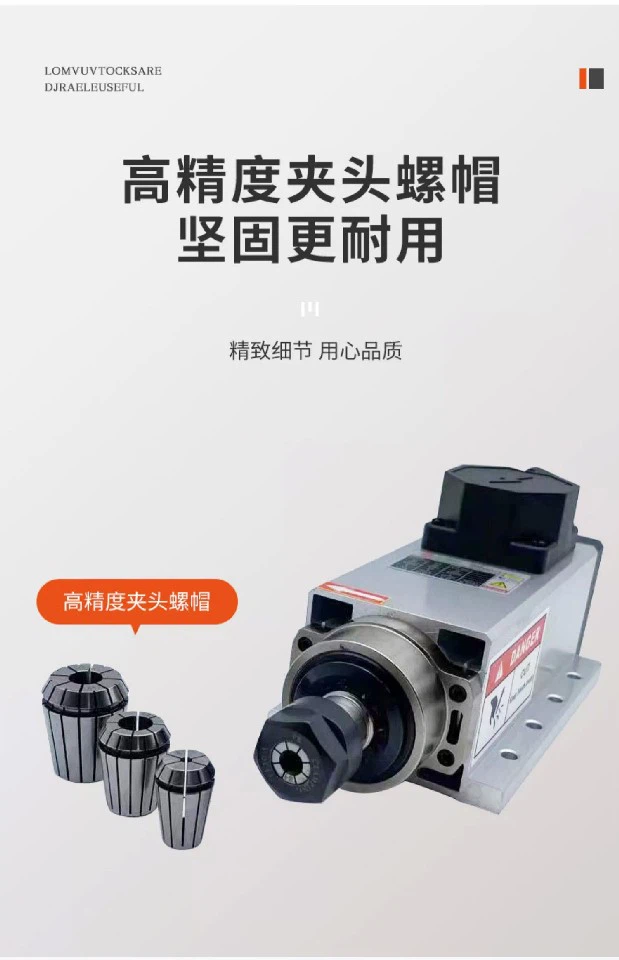
Another product in our catalog is the Engraving Machine Air - cooled Spindle. This spindle is suitable for use in engraving machines and other CNC applications. It offers high - speed rotation and excellent heat dissipation, ensuring stable and reliable performance during long - term operation.
Conclusion
The step response of a servo motor is a fundamental concept that describes how the motor responds to sudden changes in its input. Understanding the key parameters of the step response, such as rise time, settling time, overshoot, and steady - state error, is essential for selecting the right servo motor for a particular application. By considering factors like motor characteristics, controller tuning, and load conditions, you can optimize the step response and achieve better performance in your systems.
If you are in the market for high - quality servo motors or related products, we are here to help. Our team of experts can assist you in choosing the most suitable products for your specific needs. Whether you are involved in robotics, CNC machining, or other industries, we have the solutions to meet your requirements. Contact us to start a discussion about your procurement needs and let's work together to find the best servo motor solutions for your applications.
References
- Dorf, R. C., & Bishop, R. H. (2017). Modern Control Systems. Pearson.
- Franklin, G. F., Powell, J. D., & Emami - Naeini, A. (2015). Feedback Control of Dynamic Systems. Pearson.
- Ogata, K. (2010). Modern Control Engineering. Prentice Hall.


