

Multi Head CNC Router
Why choose us
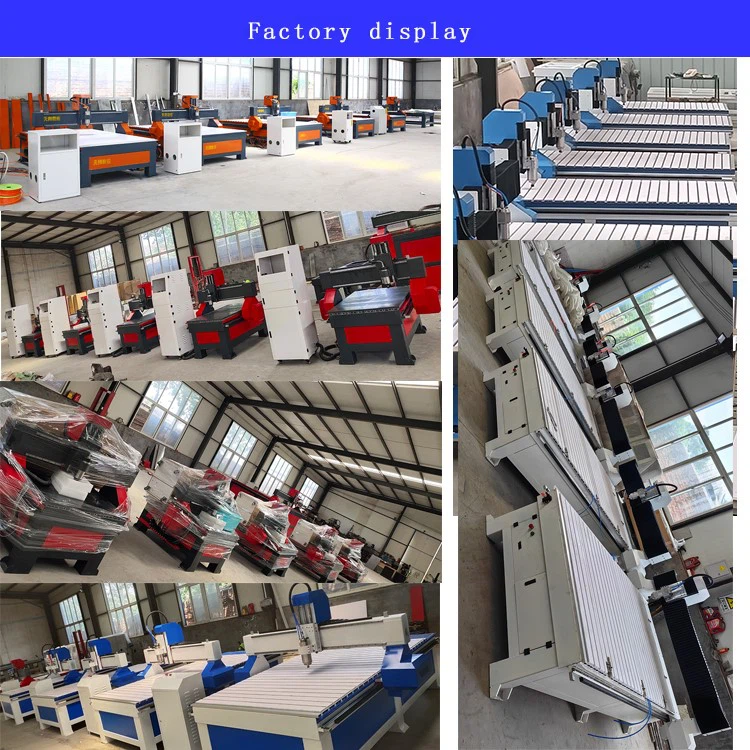
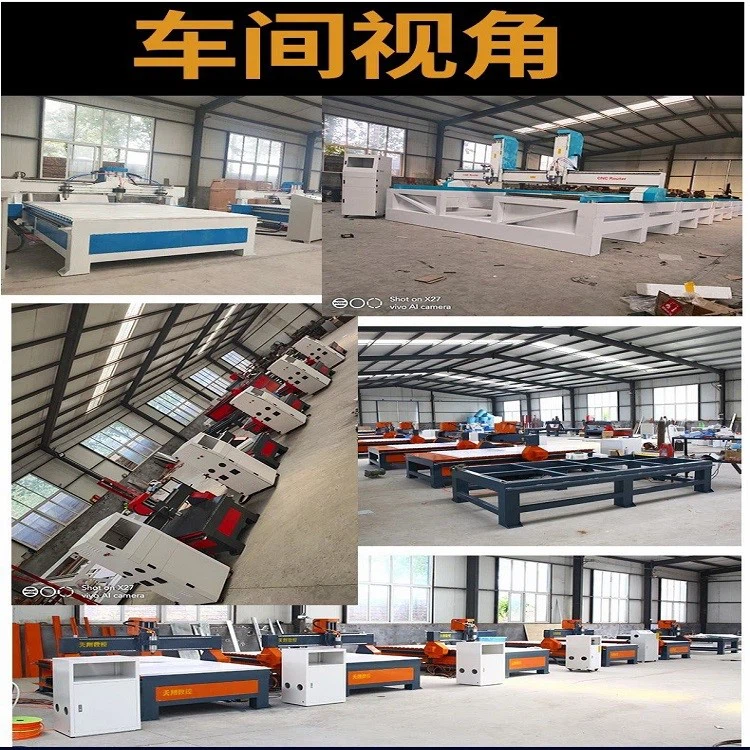
Our Factory
Liaocheng Tianxiang CNC Equipment Co., Ltd. has been producing carving machines for over a decade. We have a skilled design and technical team, our own production facility, and offer customization for various machines, including specialized fixtures. Our experience and technology are well-developed and advanced.
Our Product
We are a high-tech enterprise specializing in the research, production, and sales of a wide range of carving machines. Our products include woodworking carving machines, advertising carving machines, stone carving machines, Buddha carving machines, metal mold machines, jade carving machines, laser carving machines, relief machines, cylindrical carving machines, polystyrene carving machines, and woodworking CNC machining centers.
Product Application
Our machines are used across various industries. These include advertising, woodworking, stone, metal, craft gifts, furniture manufacturing, mold and model making, as well as electronic and electrical industries.
Production Market
Our products are exported to over 40 countries and regions, including South Korea, Russia, the United States, Japan, Thailand, Malaysia, Vietnam, Canada, Iraq, Indonesia, Italy, and Hong Kong.
Multi head CNC router machine is a type of industrial CNC machine that can cut & carve the same pattern on different project with multiple spindles at the same time, which greatly increases the machining speed and completes the work efficiency of multiple devices at the same time. In some cases where the machining volume is not large, a single spindle can also work independently, effectively and reasonably control the production cost. When batch processing, the product consistency is good, and the quality is high, which greatly reduces the purchase cost of production equipment. One machine is multi-purpose, economical and affordable.
-
 Multi Head Relief Engraving MachineMulti head relief engraving machine is an advanced engraving machine that can efficiently engravingAdd to Inquiry
 -
 Multi-head CNC Engraving MachineThe Multi-head CNC engraving machine has high precision and good process quality. It can adjust theAdd to Inquiry
 -
 Multi-head Woodworking Engraving MachineThe Multi-head woodworking machine has a high degree of operability and intelligence. It does notAdd to Inquiry
 -
 Fully Automatic Engraving MachineMulti-head woodworking engraving machine has flexibility and scalability. Fully automatic engravingAdd to Inquiry
 -
 Multi Head CNC Wood Carving MachineMulti Head Cnc Wood Carving Machine has the advantage of precision machining. Because the equipmentAdd to Inquiry


The main difference between a multi-head CNC machine and a three-axis CNC machine is the number of machining spindles. A multi-head CNC machine features multiple spindles, which allows for automatic tool changes, making it a simpler and more cost-effective alternative to an automatic tool changer (ATC) CNC machine. Multiple spindles can be manually selected and switched for engraving, and they can operate simultaneously. Multi-head CNC machines have become increasingly popular for producing panel furniture in recent years. In this section, we will compare and contrast a three-axis CNC wood machine with a multi-process engraving machine in terms of processing materials, operating techniques, processing effects, application scope, and target customers.
Total Number of Spindles
A three-axis CNC wood machine has only one main spindle, whereas a multi-head CNC machine has multiple spindles (e.g., a four-head engraving machine is common).
Material Preparation
Multi-head CNC machines can process materials that standard engraving machines handle, including PVC boards, MDF, imitation marble, aluminum sheets, and more. This makes them capable of working with a wider range of materials compared to a three-axis CNC wood machine.
Operating Difficulty
Both types of CNC routers are computer-controlled and relatively simple to learn and use. However, operating a multi-head CNC machine can be more complex due to the need to manage multiple spindles. Skilled technicians are available to provide free operating training to help with this complexity.
Processing Effects
While both multi-head CNC machines and three-axis CNC wood machines can perform plane engraving and create beautiful patterns, multi-head CNC machines can handle more complex tasks such as relief carving and 3D engraving with greater precision.
Application Scope
Multi-head CNC machines are versatile and can handle a variety of tasks. They are suitable for carving intricate artwork as well as traditional furniture items like doors, windows, cabinets, screens, and mold carvings.
Target Customer Groups
If you only need to perform simple plane engraving and do not require high precision, a standard woodworking engraving machine will suffice. However, if you need to process batches of items, handle complex patterns, and require high-quality results, a multi-process engraving machine is a better choice. It is also a cost-effective alternative to an ATC CNC machine, offering similar functionality at a lower price.
The Benefits Of Multi Head CNC Router
Multi-Purpose
You can cut and engrave without the need for an alternate tool. You can cut materials precisely and as many times as you need. Reducing frequency of error and wastage.
Ease Of Use
CNC routers generally receive their instructions from your software. Once training has been undertaken, the machine is relatively simple to use.
Efficiency
These machines can be operated by just one person which cuts down on labour costs. The operating speed is up to 25,000 RPM and the tool head can move quickly. Allowing for materials to be processed at an exceptionally high rate. These factors make the machine extremely cost-effective after the initial investment.
Safety
CNC routers can create large amounts of chippings and dust during the cutting process. They usually come fitted with a dust extraction system comprising of an extractor fan and filter. This minimises the amount of dust leaving the machine and going into the surrounding environment.

Applications of Multi-Axis CNC Machining
Multi-axis CNC machining has found widespread application across various industries, revolutionizing the production of components and parts. From aerospace and automotive sectors to medical device production and tool and die making, this advanced technique offers a range of advantages that cater to the unique needs of each industry. Let’s explore some applications where multi-axis CNC machining has proven invaluable.
Aerospace and Aviation Industries
The aerospace and aviation industries demand high precision, complex geometries, and lightweight components. Multi-axis CNC machining is used to manufacture aircraft parts such as turbine blades, engine components, structural elements, and intricate brackets.
Medical Device Production
The medical device industry relies heavily on multi-axis CNC machining to produce intricate and precise components. These machines manufacture customized medical devices with exceptional precision, including orthopedic implants, surgical instruments, prosthetics, and dental appliances. The ability to machine intricate features, tight tolerances, and complex geometries ensures the quality, reliability, and functionality required in the medical field.
Automotive Manufacturing
In the automotive industry, multi-axis CNC machining is widely employed for producing engine components, transmission parts, chassis components, and customized interiors. This technique allows for the efficient machining of complex shapes, contours, and undercuts found in engine blocks, cylinder heads, crankshafts, and other critical automotive parts.
Tool and Die Making
Manufacturers use multi-axis machines to produce molds, dies, and tooling components for various industries, including automotive, aerospace, and consumer goods. The versatility and flexibility of multi-axis machining enable the creation of complex cavity geometries, sharp corners, and undercuts, ensuring the accuracy and durability of the tooling used in production processes.
Prototyping and Rapid Manufacturing
Multi-axis CNC machining allows for quick turnaround times, low-volume production runs, and the creation of functional prototypes. Its ability to rapidly produce complex shapes, fine details, and varied geometries makes it ideal for iterative design processes and accelerated product development cycles.
Customized and Intricate Components
Beyond specific industries, multi-axis CNC machining caters to a broad range of applications requiring customized and intricate components. From jewelry and electronics to architectural elements and artistic pieces, the precision and flexibility of multi-axis machining empower manufacturers to meet the demands of diverse markets.
What Are the Main Components of a Multi-Axis CNC Machine?
The main components of a multi-axis CNC machine are:
Machine Frame: The machine frame holds the entire machine together, providing rigidity and support to the various parts.
Machine Control Unit (MCU): The MCU is the brain of the CNC machine. It reads programming commands and translates them into actions for the machine’s various components.
Input Devices: Input devices allow the operator to interact with the machine. This may include a keyboard for entering data.
Spindle: The spindle holds the cutting tool. The movement of the cutting tool is controlled by the spindle.
Display: The CNC machine features a display where machine settings and error messages can be viewed.
Machine Tools: CNC machines use specific cutting tools for machining parts.
Driving System: The driving system consists of motors that create movement in the multi-axis CNC machine. It controls the movement of the cutting tool, spindle speed, work table rotation, and other types of motion.
Feedback System: The feedback system is essential for precise movement. It monitors the machine’s movement and sends signals back to the machine controller to make necessary adjustments.
Bed: The bed is where the workpiece material is mounted. It has various fixtures to secure the workpiece in place. In multi-axis machining, the bed can rotate or move horizontally, unlike in traditional machining centers where the bed is stationary.
Chuck: The chuck is a clamp that holds the workpiece tightly during machining, typically used in lathe operations.
Headstock: The headstock contains the bearings, main drive, and gears required for rotating the chuck. It is closed and should only be removed by trained professionals for inspection, maintenance, or repair.
Types of CNC Machines According to the Number of Axes
CNC machines can be categorized based on the number of axes they have. Here are some common types:
2-Axis CNC Machine
2-axis CNC machines are the most basic type available. They have two movement axes: The X-axis (horizontal axis) and the Y-axis (vertical axis). These machines typically make basic straight-line cuts or drill holes in boards, processing only one surface of the workpiece without relocating it. They operate on a fixed workpiece.
3-Axis CNC Machine
The 3-axis CNC machine is one of the most prevalent types. It can manufacture parts in 2.5 dimensions and has three axes of movement: The X, Y, and Z axes (depth axis). This machine can operate on all six surfaces of a conventional square or rectangular material block, but the block must be repositioned. Like 2-axis machines, these also operate on a fixed workpiece.
4-Axis CNC Machine
In addition to the X, Y, and Z axes, a 4-axis machine includes a rotational axis called the A-axis. The A-axis allows the cutting tool or workpiece to rotate along the X-axis. This machine is ideal for creating cutouts and performing arc cuts.
5-Axis CNC Machine
The 5-axis CNC machine includes a pivoting motion along the Y-axis, known as the C-axis. This machine can work on five surfaces of a workpiece simultaneously without relocating the work surface, making it suitable for producing complex and precise parts.
6-Axis CNC Machine
A 6-axis CNC machine adds a third rotating direction, known as the B-axis, to the cutting tool or workpiece. This allows for the manufacturing of parts with complex surface finishes by utilizing all possible movement directions.
7-Axis CNC Machine
A 7-axis CNC machine includes three traditional axes for moving the cutting tool, three axes for rotating the workpiece, and a seventh axis for rotating the arm that holds the cutting tool. The seventh axis, known as the E-axis, enables the creation of highly complex parts.
9-Axis CNC Machine
A 9-axis CNC machine combines a 5-axis milling machine with a 4-axis lathe. The milling machine handles the surface finish, while the lathe works on the internal features of the workpiece. This configuration allows for the production of both internal and external features of a part.
12-Axis CNC Machine
The 12-axis CNC machine is the most complex device in the manufacturing industry. It features two cutting heads that can move along all six axes (X, Y, Z, A, B, C). This machine enhances precision and production rates due to its advanced capabilities.
●Tailstock: The tailstock supports long cylindrical workpieces. Without it, the workpiece might shift due to the impact of the cutting tool.
●Footswitch: The footswitch is a pedal used to perform auxiliary functions on the CNC machine, such as activating and deactivating the tailstock.
●Coolant System: Multi-axis machines generate a lot of heat during operation. The coolant system maintains the temperature within safe limits to protect the machinery.
Maintenance Tips for Multi Head CNC Router
Here is a checklist for maintaining your CNC router:
Dust Cleaning Check: Regularly clean dust, especially from the spindle shell, transmission gears, rails, electric cabinet, and control cabinet. Consider using dust covers for rails and gears.
Air Cooling Check: Ensure cooling fans are functioning properly and not obstructed by dust. Verify that the spindle temperature remains within the correct range.
Water Cooling Check: Ensure that the cooling pump and water pipes are working correctly and that there is no dust covering them. Check that the spindle temperature remains within the correct range.
Oil Lubrication Check: For manual lubrication systems, remember to press the handle to dispense oil. Ensure there is enough oil and that the oil pump, oil pipes, and CNC kits are functioning properly.
Belt Tension Check: Verify that the belt is adequately tightened and not worn out.
Screw Fixing Check: Inspect the screws of all moving parts to ensure they are tight and functioning correctly.
Safety Sensor Check: Ensure that all safety sensors are working properly.
Our Factory
Our company is a high-tech enterprise dedicated to the development, production, and sales of optical and electrical products such as CNC engraving machines, CNC plasma cutting machines, laser engraving machines, laser marking machines, computer engraving machines, and laser welding machines. We are committed to providing customers with high-quality products and services. Since its establishment, the company has always been guided by market demand, driven by technological innovation, and aimed at customer satisfaction, winning widespread market recognition and customer trust.

FAQ
As one of the most professional multi head CNC router manufacturers and suppliers in China, we're featured by quality products and good price. Please rest assured to buy high-grade multi head CNC router for sale here from our factory.
multi head cnc router with extended warranty, Fully Automatic Engraving Machine, multi head cnc router